Math Buddy · Classes 3 to 8

Computational ThinkingthroughMathematics

Think • Play • Discover

A thinking adventure, not a coding textbook. Six books for Classes 3 to 8 turn mathematics into games, puzzles and challenges, where children learn to find patterns, break down problems, plan their steps and check their thinking.

Free for every child. Other Math Buddy programmes are optional.

For schools: enquire about the series →
Class 3 Class 4 Class 5 Class 6 Class 7 Class 8
What children learn

What is computational thinking?

Computational thinking is solving a problem so carefully that you could explain every step to someone else, or to a machine. Children practise four ways of thinking in every class. It is not coding, and it does not need a computer. It needs a pencil, a partner and a reason to be careful.

Finding patterns

Spot a rule, test it, extend it and explain why it always works.

Breaking problems into parts

Split a big problem into smaller ones that can each be solved.

Choosing what matters

Keep what you need and ignore the rest, and work out what you cannot see.

Building and checking steps

Follow, trace and fix step-by-step instructions. From Class 6, write your own.

How it works

Every chapter is a mission. Every mission is a game.

Each mission is built on a mathematics chapter that children study that year, so the thinking grows out of the maths they already know. The game is not a reward at the end of the lesson. It is where the thinking happens.

The one ruleWrite it down before you check.
  • Played in pairs, with roles that swap. Reader and Keeper, Machine and Programmer: one child gives instructions while the other follows them exactly as written.
  • Everything is on the child's page. Every rule, role and material is printed in the book, with a worked example first. Cut-out sheets are included where a game needs them.
  • No lab, no screens, no special kit. A pencil, the book and a partner are enough.
  • Points for careful thinking. The scoring rewards a reason written down, not a lucky guess.

A Class 3 mission in one period

0–2 min
LaunchThe teacher reads the goal and the worked example.
2–17 min
Play the gamePairs play, writing every move down before they check.
17–20 min
The key questionOne question that brings out what the game was really about.
20–36 min
Think It pagesPuzzles that use the same idea in new ways. From Class 6, missions are longer and take two or more lessons.
The series

Six books, one for each class from 3 to 8.

Each book follows that year's mathematics. From Class 6, team projects run over several weeks alongside the missions.

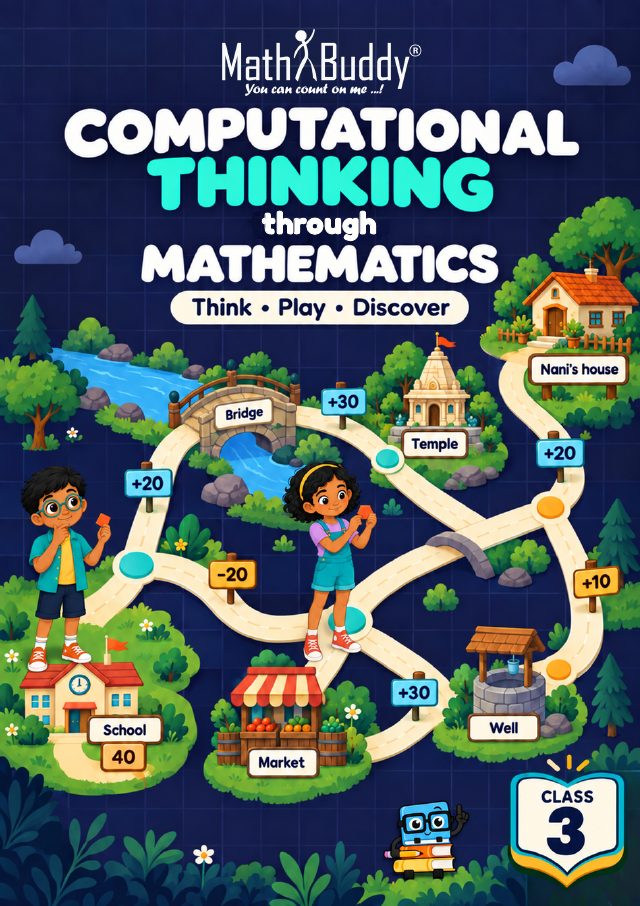
Computational Thinking through Mathematics, Class 3 cover

Class 3

ISBN 978-81-17805-00-8

14 missions

Mystery Toy Box, Raksha Bandhan, The Pouring Puzzle
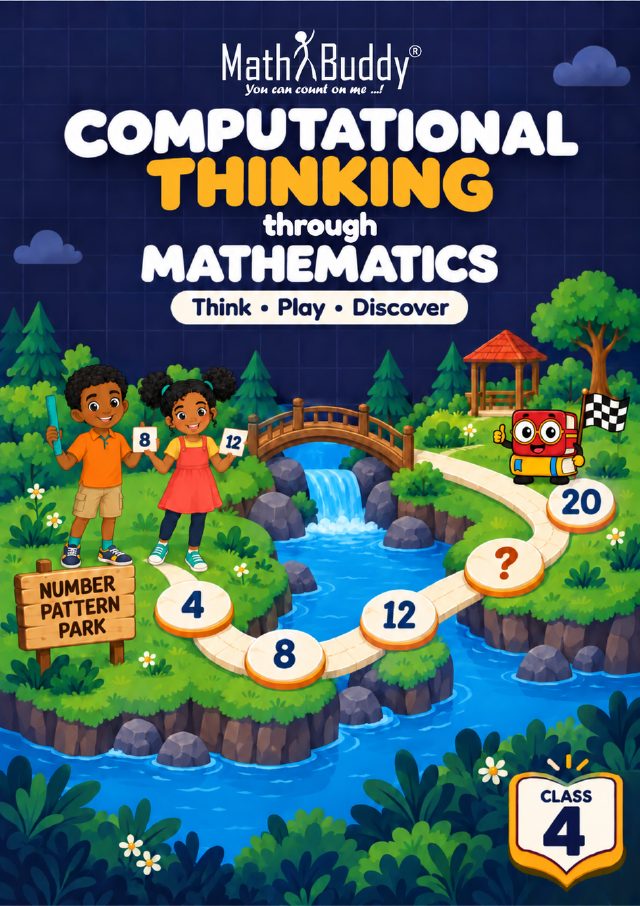
Computational Thinking through Mathematics, Class 4 cover

Class 4

ISBN 978-81-17805-01-5

14 missions

Three Steps Away, Chunk It Down, Write the Rule
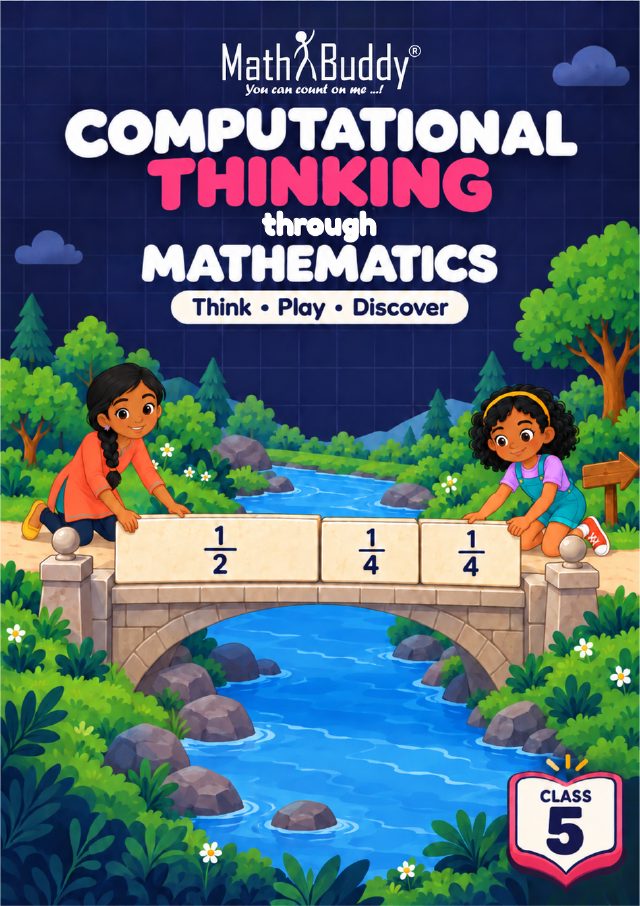
Computational Thinking through Mathematics, Class 5 cover

Class 5

ISBN 978-81-17805-02-2

15 missions

Fewest Trips, Quarter Turn, Choose the Scale
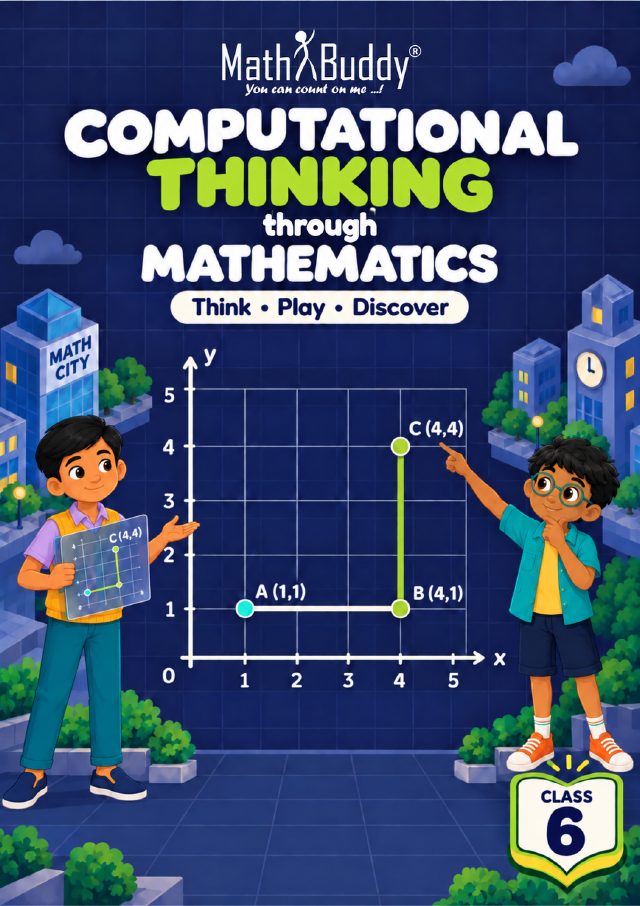
Computational Thinking through Mathematics, Class 6 cover

Class 6

ISBN 978-81-17805-03-9

10 missions + 2 projects

Run My Rule, Say Twenty-One, Plan Before You Press
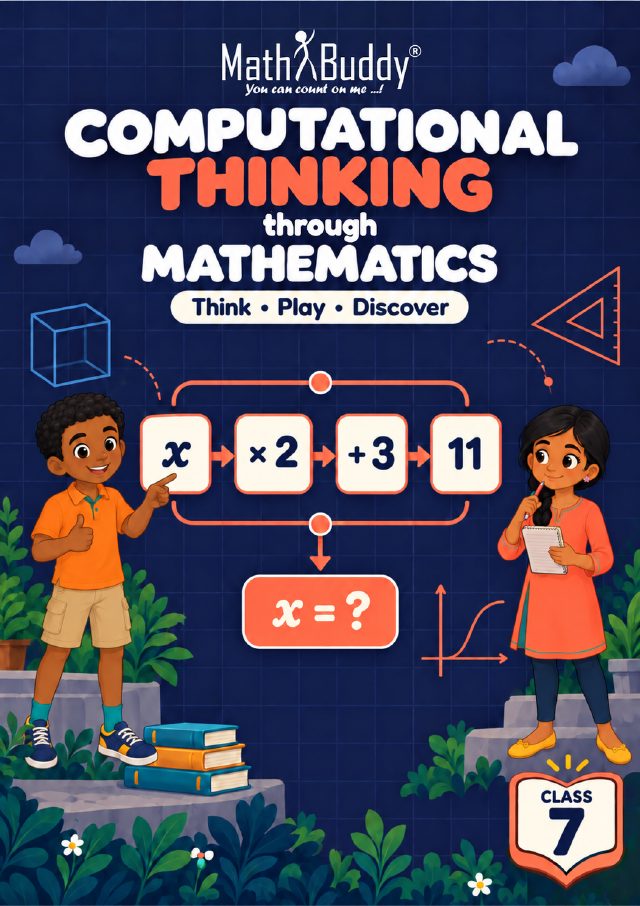
Computational Thinking through Mathematics, Class 7 cover

Class 7

ISBN 978-81-17805-04-6

15 missions + 2 projects

The Sealed Machine, Crack the Rings, Undo My Trick
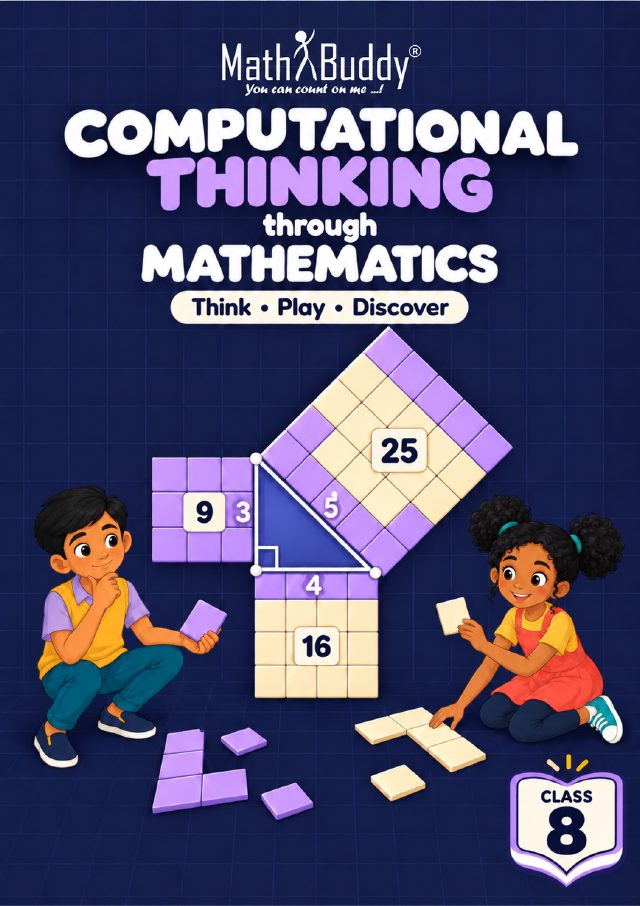
Computational Thinking through Mathematics, Class 8 cover

Class 8

ISBN 978-81-17805-05-3

14 missions + 2 projects

How Many Ways, Plant the Bug, Always, Sometimes, Never

The series at a glance

SeriesComputational Thinking through Mathematics
Classes3, 4, 5, 6, 7 and 8 (one book per class)
Missions82 in all: Class 3: 14, Class 4: 14, Class 5: 15, Class 6: 10, Class 7: 15, Class 8: 14
Projects2 team projects each in Classes 6, 7 and 8
CurriculumAligned to the CBSE Computational Thinking curriculum for Classes 3 to 8; each mission is built on that year's NCERT mathematics
AssessmentTeacher-built assessments from the CT question bank in the Math Buddy app; every question has a scoring rubric
FormatFull-colour print activity book with cut-out sheets; a teacher manual for every class
EquipmentNone: a pencil, the book and a partner
AuthorKannan Bharadwaj, co-founder, Math Buddy
PublisherConcept Learning Technologies Pvt Ltd (Math Buddy), Vadodara
For schools

Bring computational thinking to your school.

Aligned to the CBSE Computational Thinking curriculum for Classes 3 to 8. Ready for any maths teacher to run in regular maths lessons, with no lab and no extra equipment.

  • A student book for every class, 3 to 8One mission per maths chapter, so CT fits into the year you already teach.
  • A teacher manual for every classA minute-by-minute plan for each mission, the key question to ask, and every answer worked out.
  • Assessments your teachers build, with scoring rubricsTeachers pick questions from the Math Buddy CT question bank to build their own class assessments. Every question comes with a scoring rubric, so reasoning is marked the same way across teachers and sections.
  • Projects for Classes 6 to 8Team projects with a full plan and a marking rubric, for the project component where schools have little ready-to-run support today.
  • Practice in the Math Buddy appEvery student gets an account for computational thinking practice, with instant feedback on every answer.

Ask about the books

Tell us a little about your school. We'll get back to you with sample missions and pricing.

Classes you're interested in

By sending this you agree to be contacted about Math Buddy. See our privacy policy.

Thank you!

We'll be in touch soon. To talk sooner, call or WhatsApp +91 72279 87099.

Questions

Questions parents and schools ask.

What is computational thinking for children?
Computational thinking is a way of solving problems step by step: finding patterns, breaking a problem into parts, choosing what matters, and building and checking a sequence of steps. Children can learn it without a computer, through games and puzzles in subjects they already study, such as mathematics.
Which classes is the series for?
Classes 3 to 8, with one book for each class. Classes 3, 4 and 5 have 14, 14 and 15 missions. Classes 6, 7 and 8 have 10, 15 and 14 missions, plus two team projects each.
How long does one mission take?
It depends on the class. In Class 3, a mission fits in one period of about 36 minutes: a short launch, 15 minutes of play in pairs, one key question, and Think It puzzle pages. From Class 6, missions are longer and usually take two or more lessons, and each team project runs over several weeks.
Does my child need a computer to use the book?
No. Every mission is played on paper, with a pencil and usually a partner. The app is extra practice, not a requirement.
Is this a coding course?
No. Computational thinking is the habit of thinking carefully and step by step, the kind of thinking that comes before coding. Children learn it through mathematics they already study, with no programming language.
Is the account really free?
Yes. Creating an account and using the computational thinking practice costs nothing, and the CT practice stays free. Other Math Buddy programmes are optional: you can choose one later, but you never have to.
Who should create the account?
A parent or guardian, for the child, using the parent's own email address.
My school gave me a Math Buddy username. Do I need a new account?
No. Log in with the username and password your school gave you.
Is the series aligned to the CBSE Computational Thinking curriculum?
Yes. The series is aligned to the CBSE Computational Thinking curriculum for Classes 3 to 8, and each mission is built on a chapter of that year's NCERT mathematics. It is published independently by Math Buddy and is not a CBSE or NCERT publication. It works for any school that teaches from the NCERT books.
Can teachers create their own CT assessments?
Yes. In the Math Buddy teacher app, teachers select questions from the computational thinking question bank to build an assessment for their class. Every question has a scoring rubric, so answers and the reasoning behind them are marked consistently.
How can our school order the books?
Fill in the enquiry form, email sales@mathbuddyonline.com or call +91 72279 87099. We supply schools directly.
Kannan Bharadwaj

Written by Kannan Bharadwaj, co-founder of Math Buddy. B.Tech in Mechanical Engineering, IIT Madras; MBA, University of Michigan, Ann Arbor. After more than 15 years in leadership roles at Ford and General Motors, he co-founded Math Buddy in the belief that mathematics should be understood, not memorised.

Ready to think, play and discover?

More Games. More Challenges. More Thinking!